‘New’ Colombia
When drug cartels ruled
In 2000, Colombia was a country where rebel forces protected coca and opium growers in rural regions. It had been four decades of civil conflict. The rebels called the regions they controlled the “new Colombia.”
The United States was offering $1.3 billion in aid for a war against drugs and the rebels. More than 1 million Colombians had been uprooted from their homes in the years before. More than 1,000 people were kidnapped and held hostage by anti-government forces.
The United States was offering $1.3 billion in aid to fund a war against drugs and against the rebel factions. People living in those rural areas weren’t convinced the aid would help.
“If we want peace, why are we going to invest money in war, in more choppers, in more weapons?” asked Hugo Molano, a former police inspector who fled the rebel fighting in Los Pozos. “Plan Colombia was imposed by the gringos. It is not the solution.”
Photos by Tom Burton
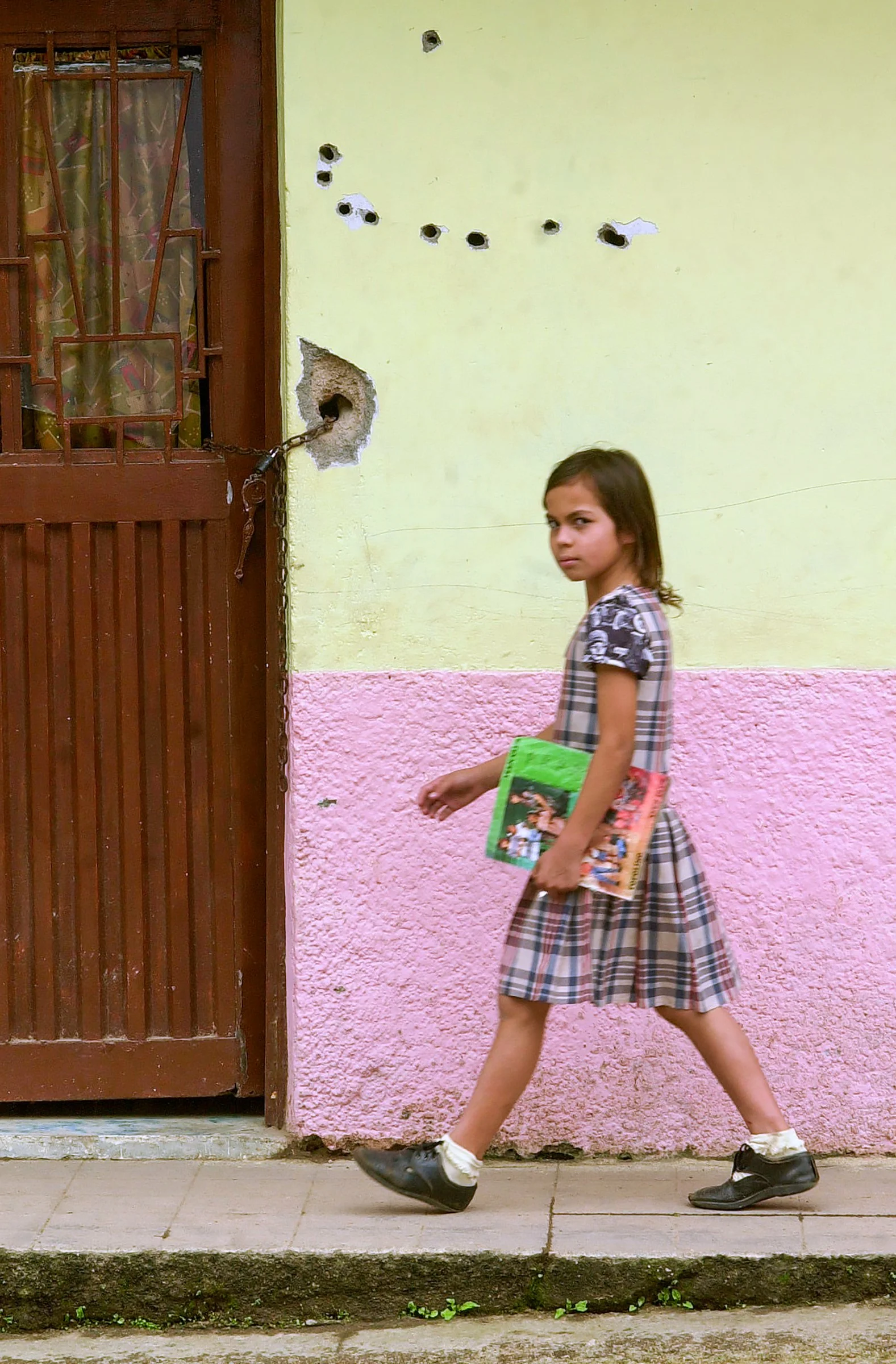
A school girl walks home past a bullet-riddled wall near the police station in Vegalarga, Colombia. Six weeks earlier, the guerrilla group FARC attacked the police station, destroying several nearby buildings and damaging others with gunfire.
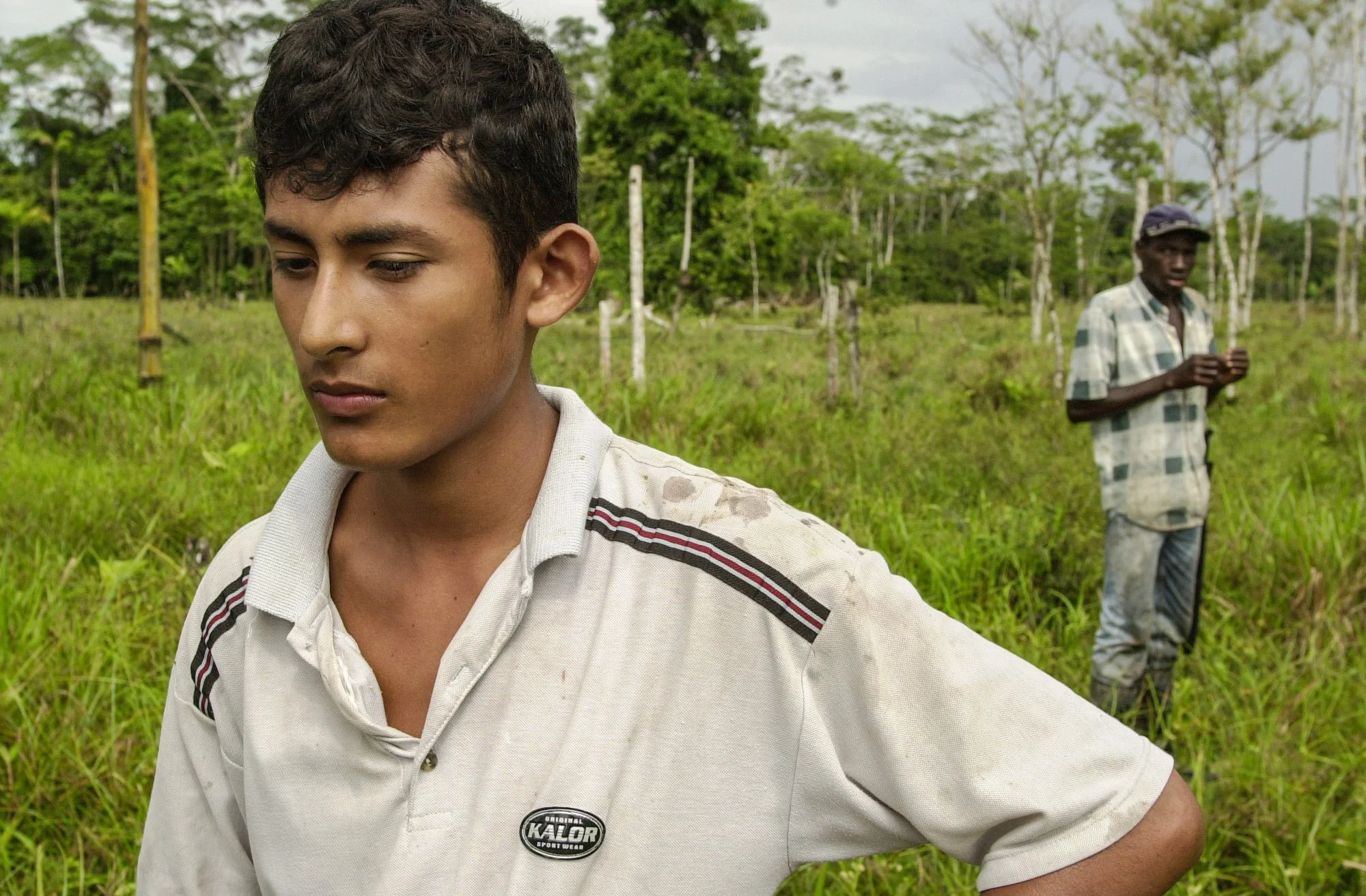
Elver Andres Castro, 15, on his family's farm in Puerto Asis, Colombia. Their coca crop was hit by a government fumigation aerial spraying campaign.
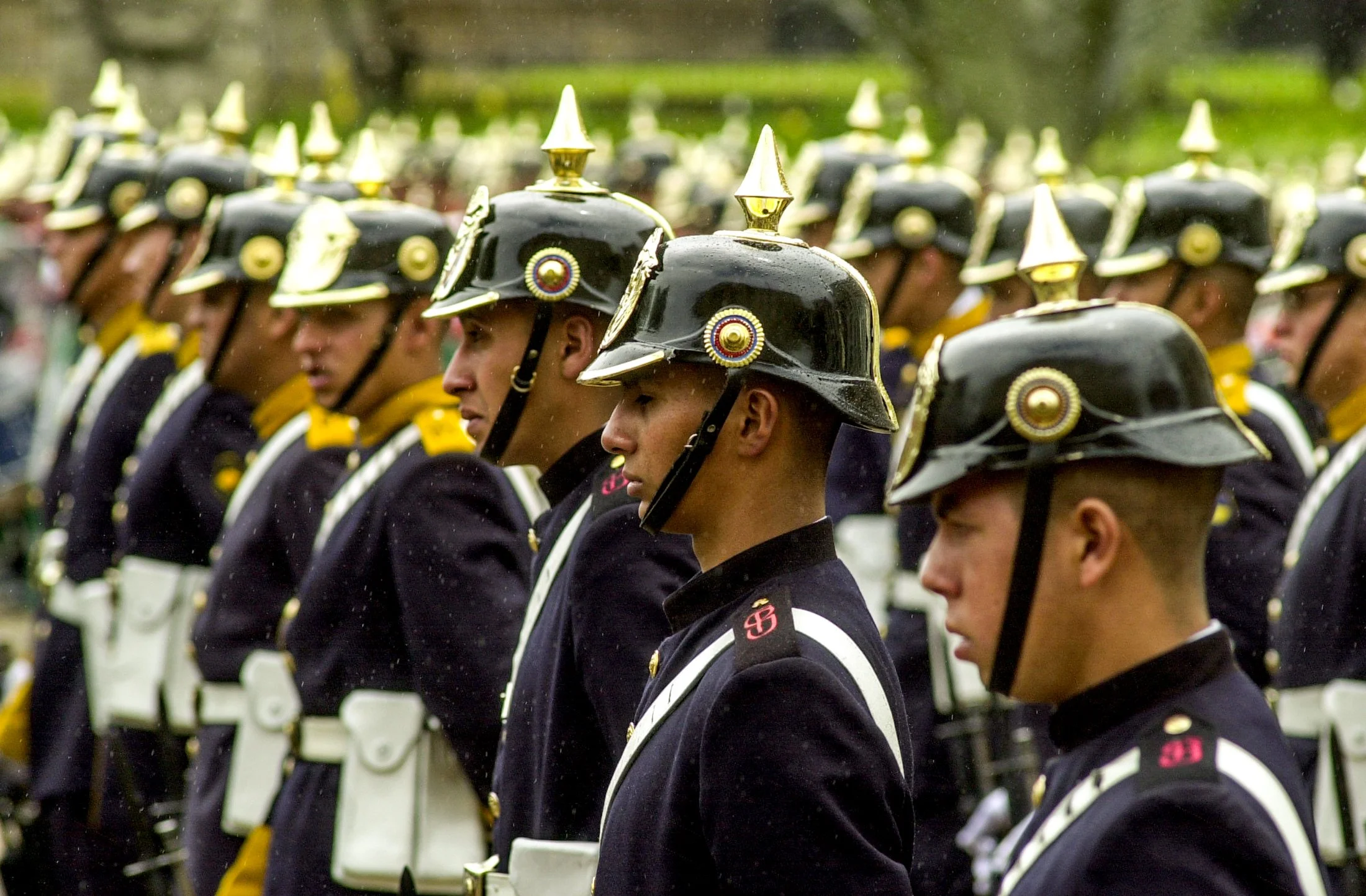
Federal troops stand at attention during a ceremony at the presidential palace in Bogota, Colombia.
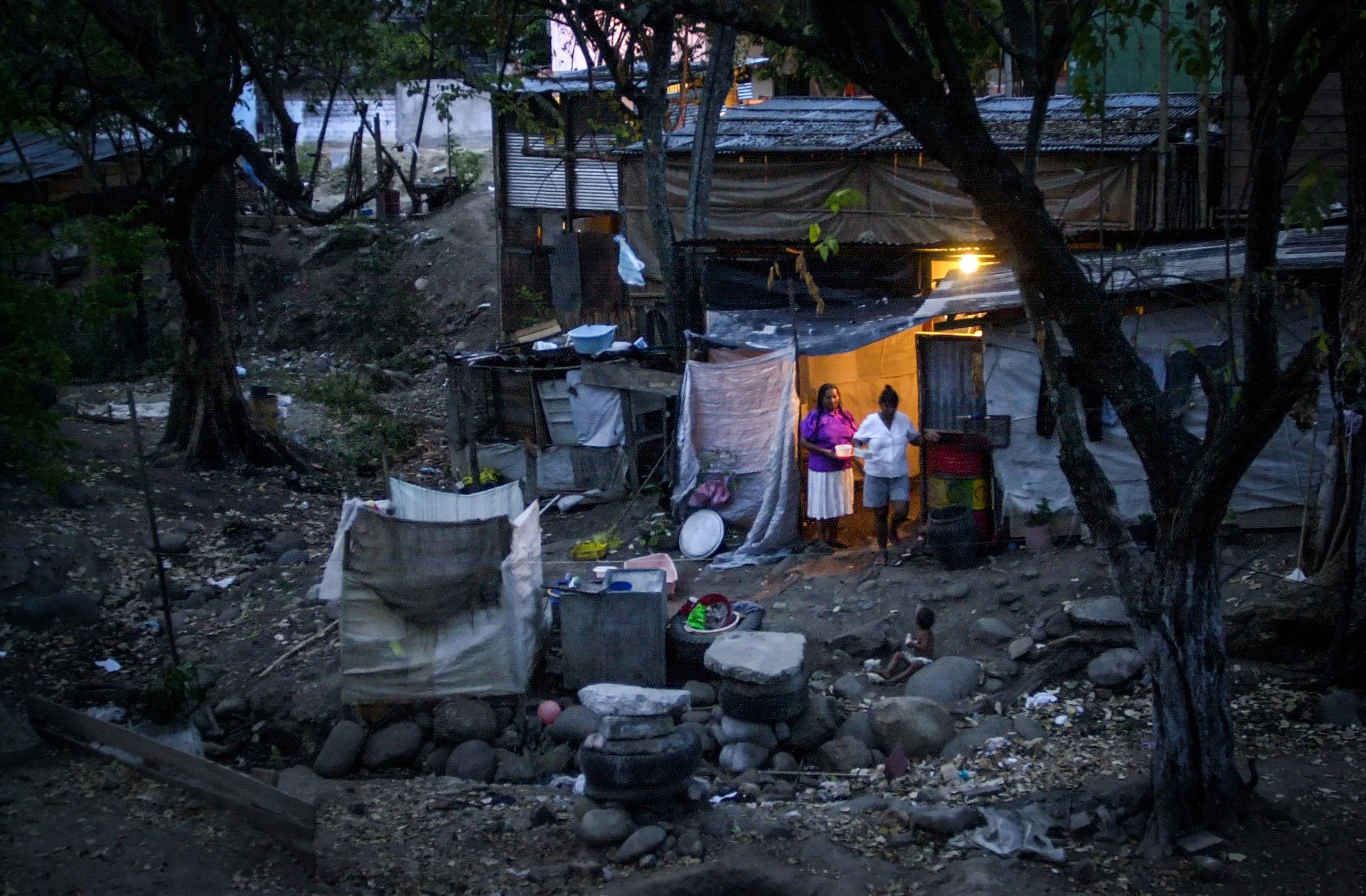
Night falls on the shanty home in the barrio Chicala outside of Neiva, Colombia, where more than 200 families lived in houses built from construction scraps.
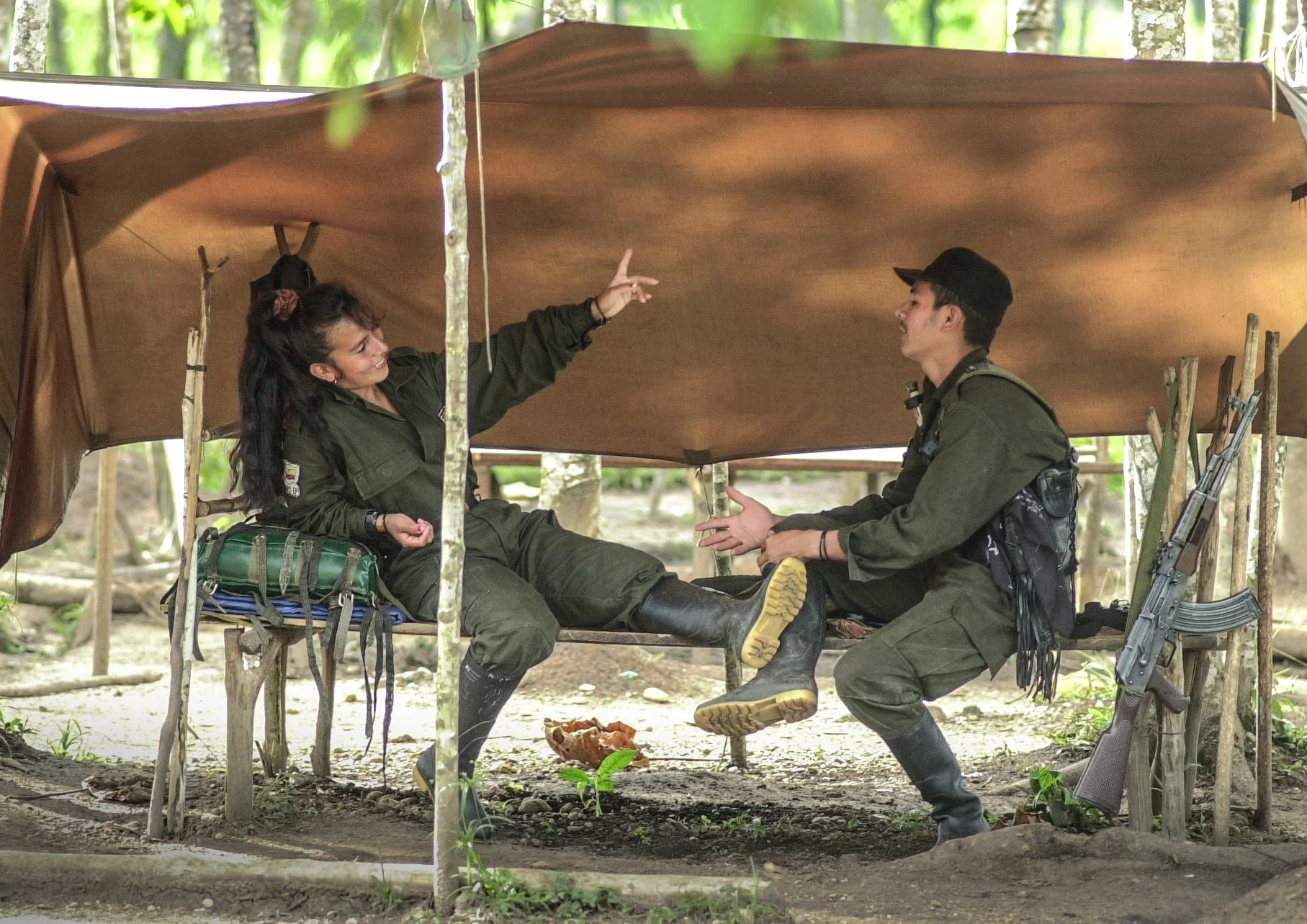
The soldiers in the rebel FARC were mostly teenagers and included many women, leading to occasional romance at the FARC headquarters outside of Los Pozos, Colombia.
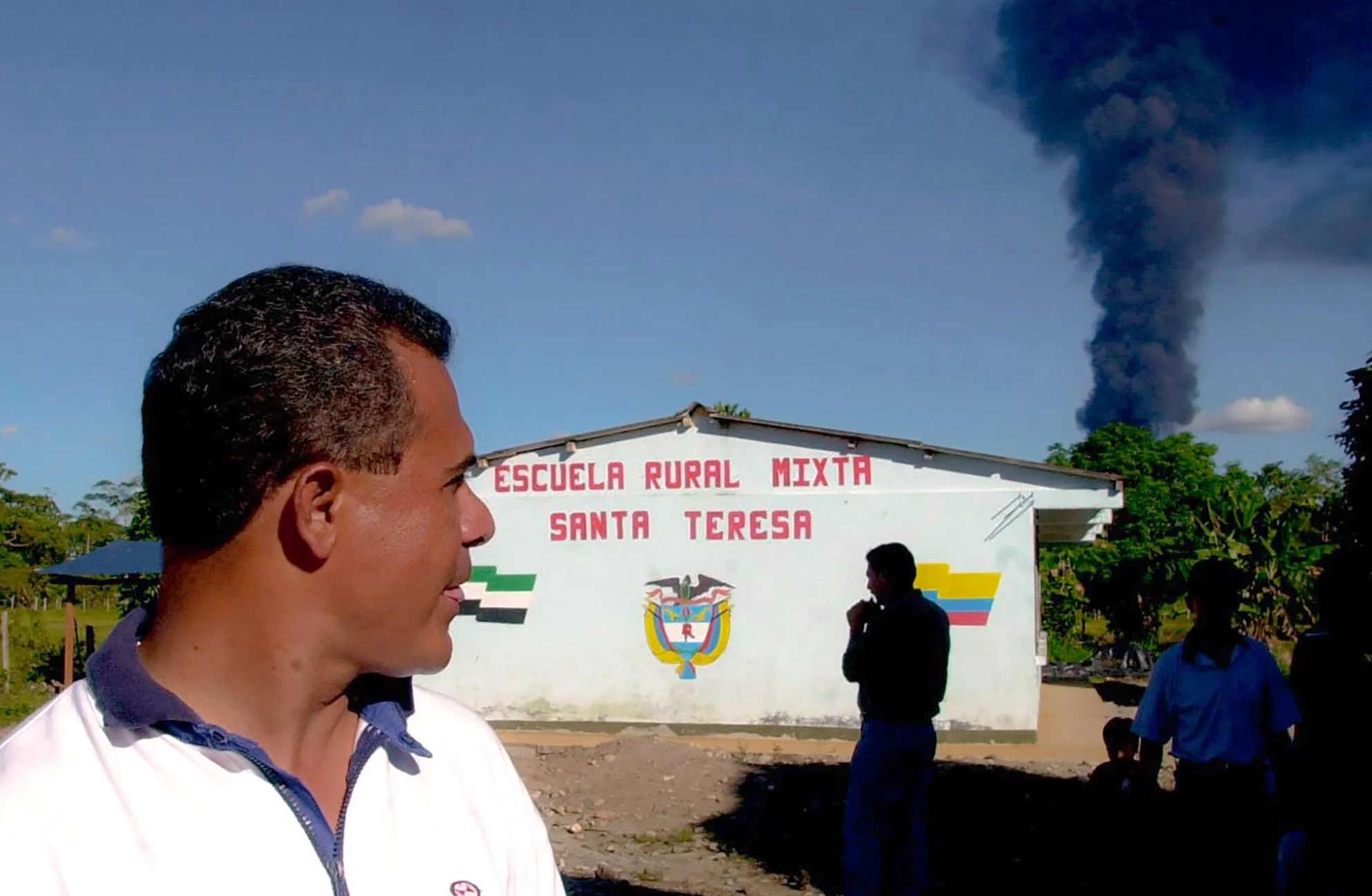
Dark smoke rises from a burning oil line near the town of La Hormiga, Colombia. Unconfirmed reports said the fire was the result of rebel sabotage.
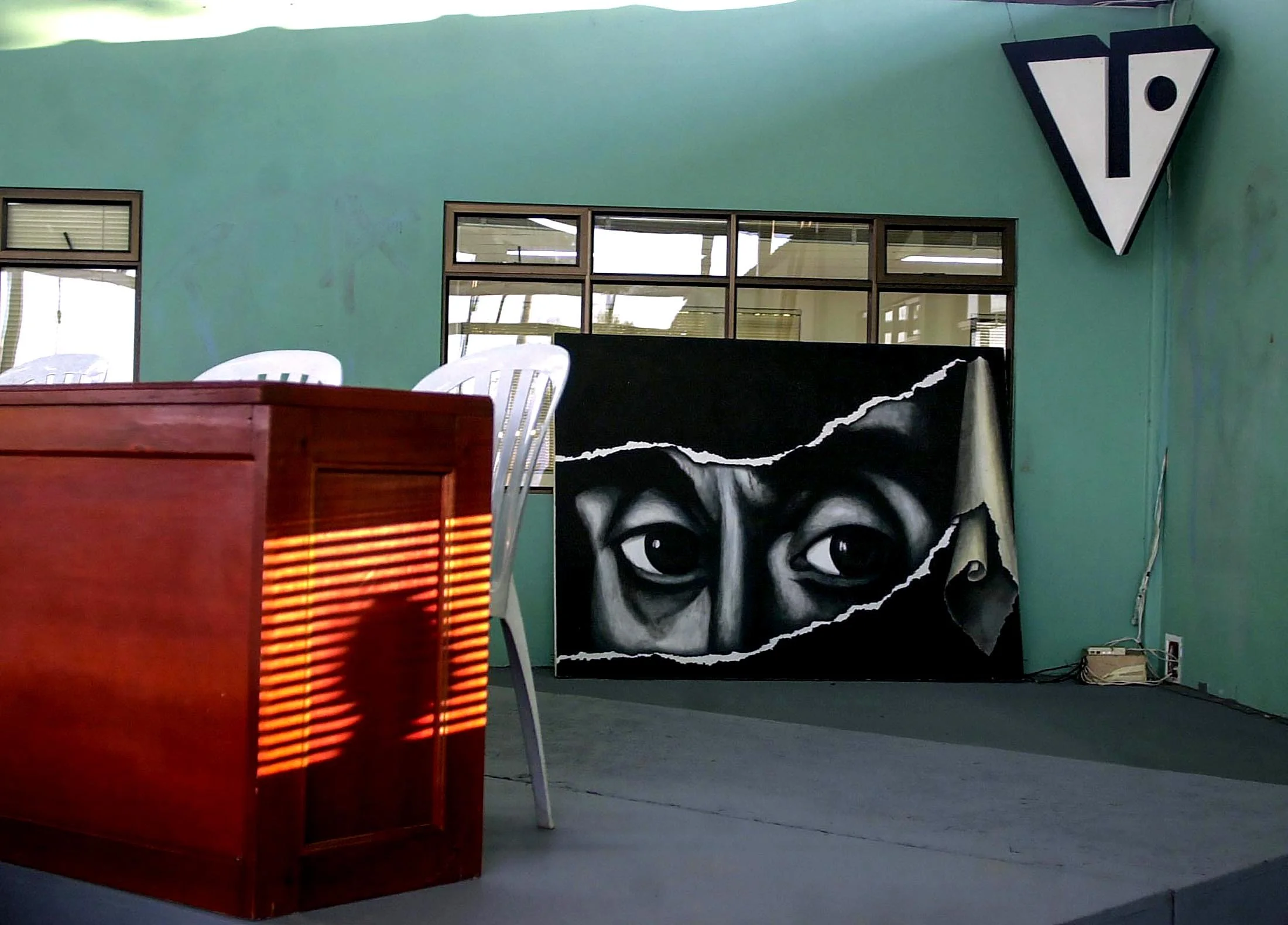
A freshly painted stage at the FARC headquarters outside of Los Pozos, Colombia, is ready for a televised peace conference.
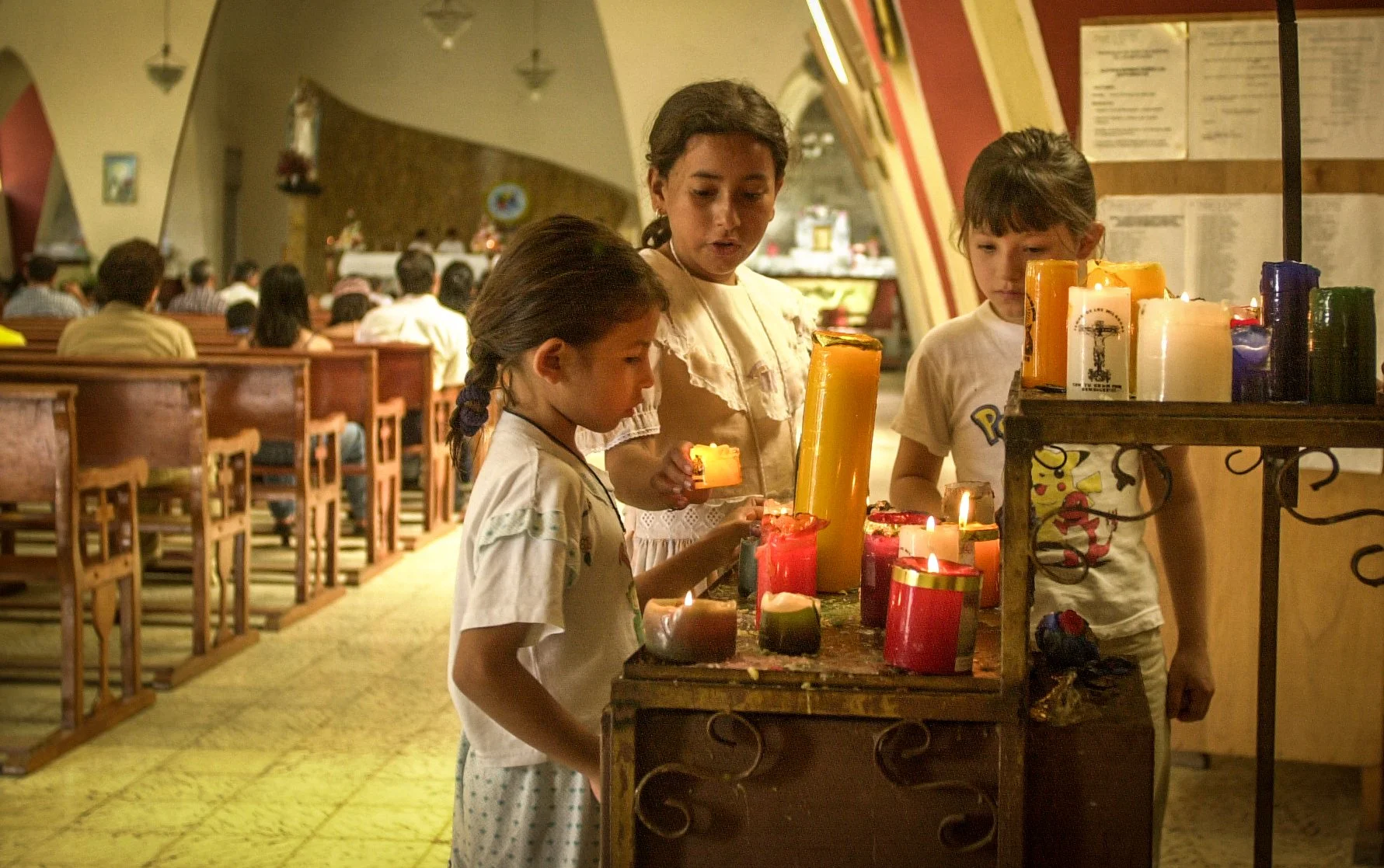
Children light candles in a church in Puerto Rico, Colombia, a village that bordered FARC territory.
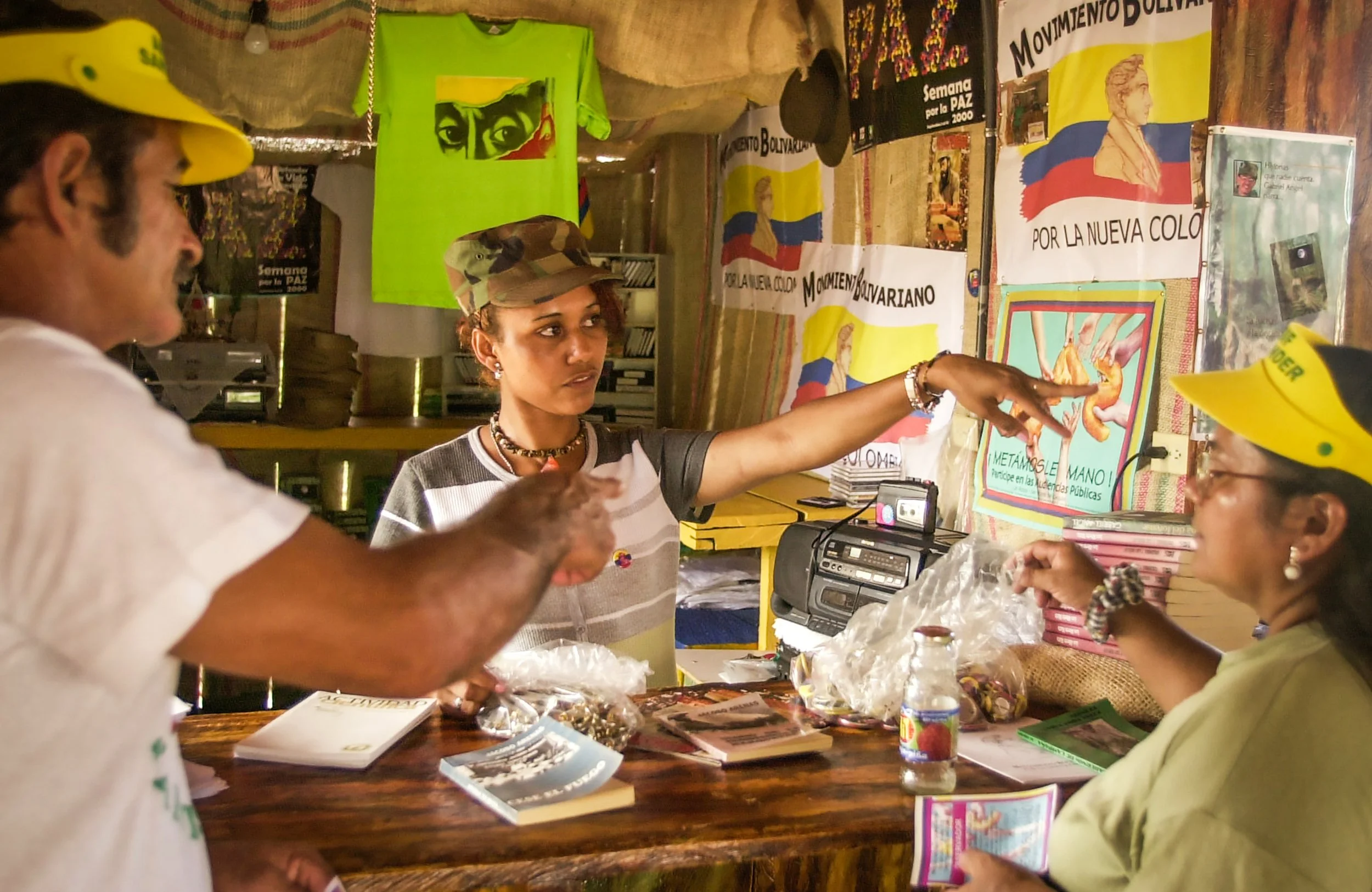
Susana Castro, a 22-year-old, seven-year veteran of the FARC, guides visitors at a FARC gift shop outside of Los Pozos, Colombia.
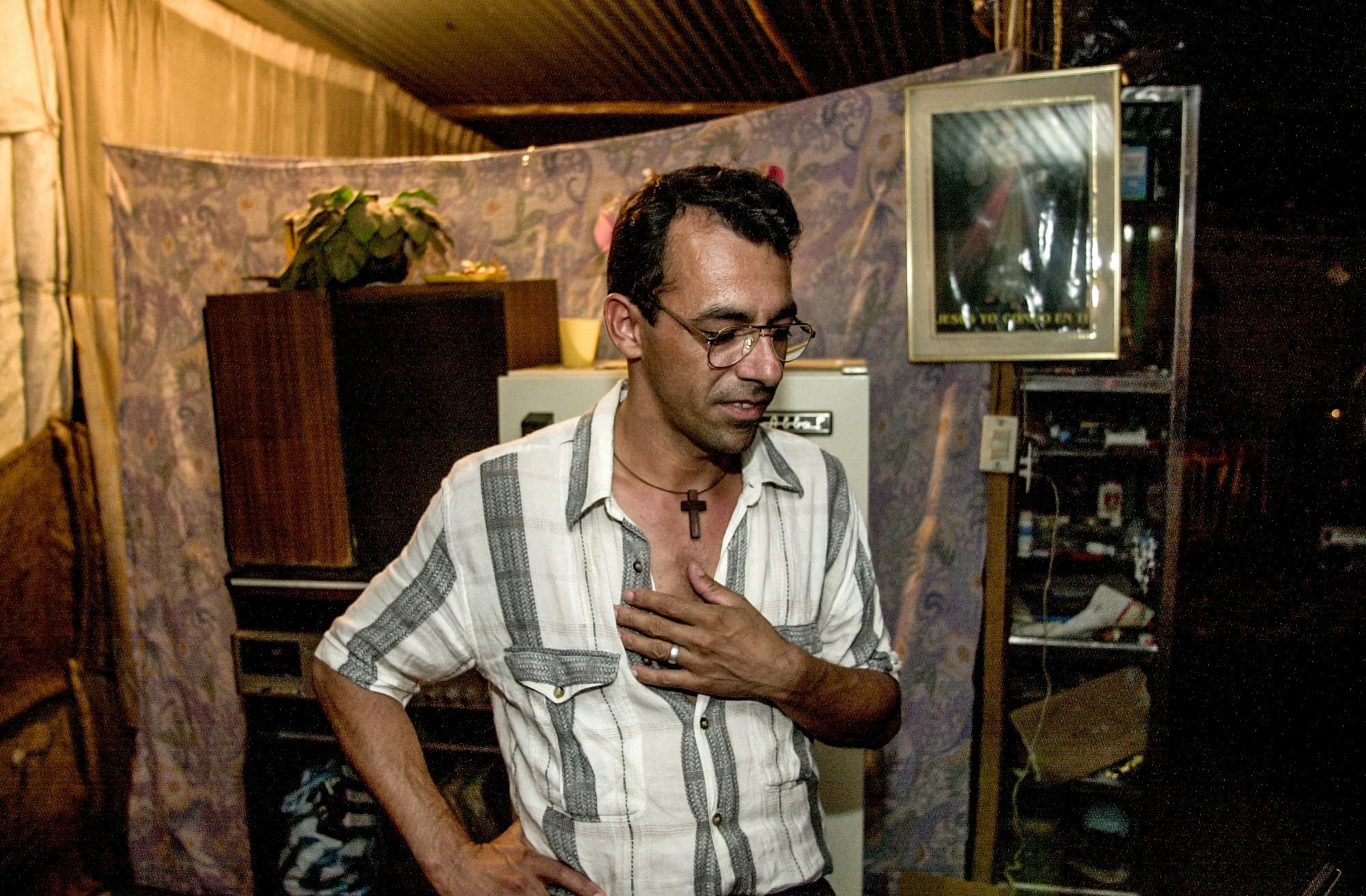
Hugo Molano, 35, in his home that is built from discarded canvas sacks. He was a policeman in Los Pozos and was forced to leave everything behind because the FARC guerrilla group threatened him.
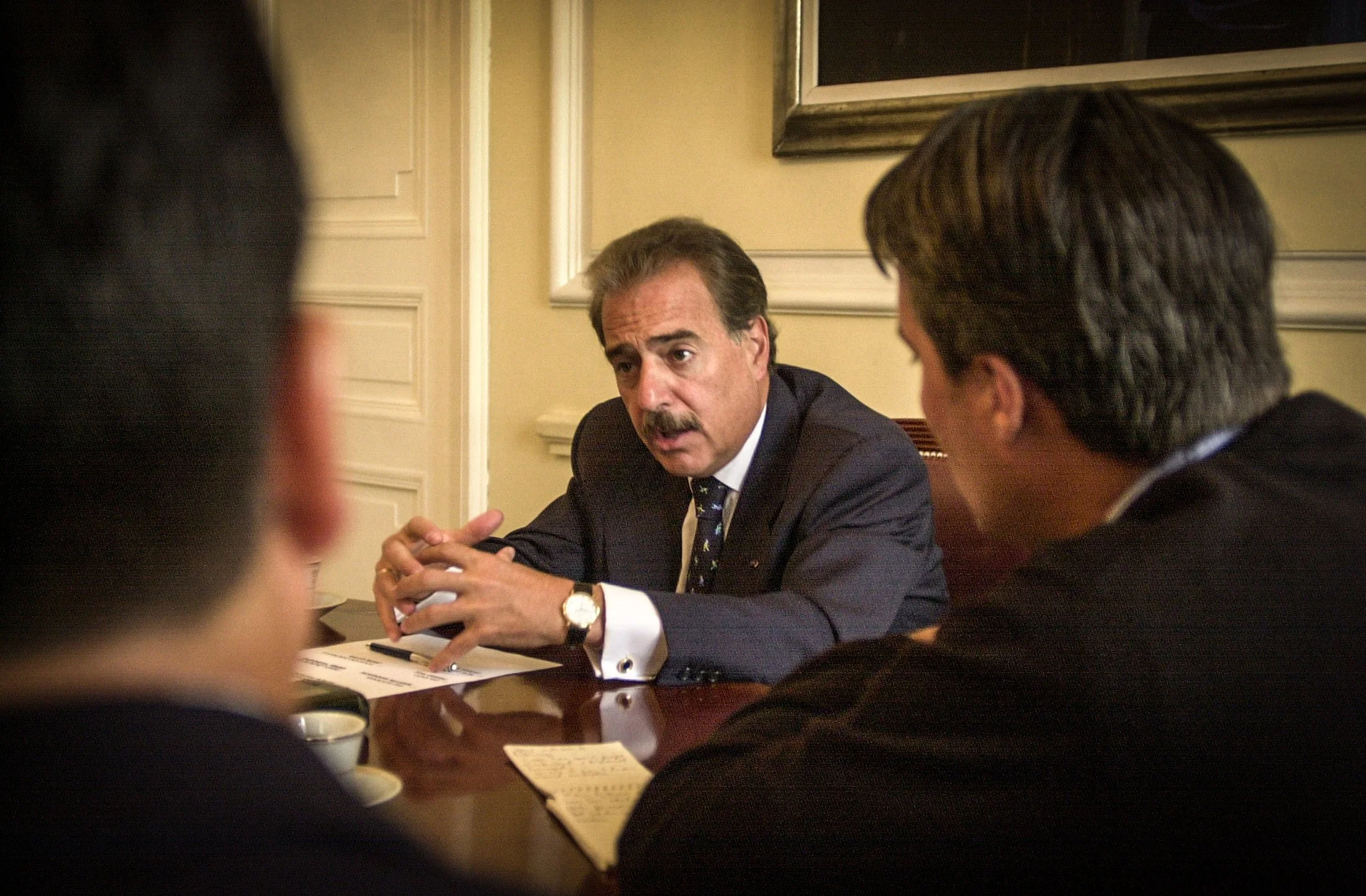
Colombian president Andres Pastrana meets with journalists from newspapers in the United States to discuss the involvement of the US in Plan Colombia.
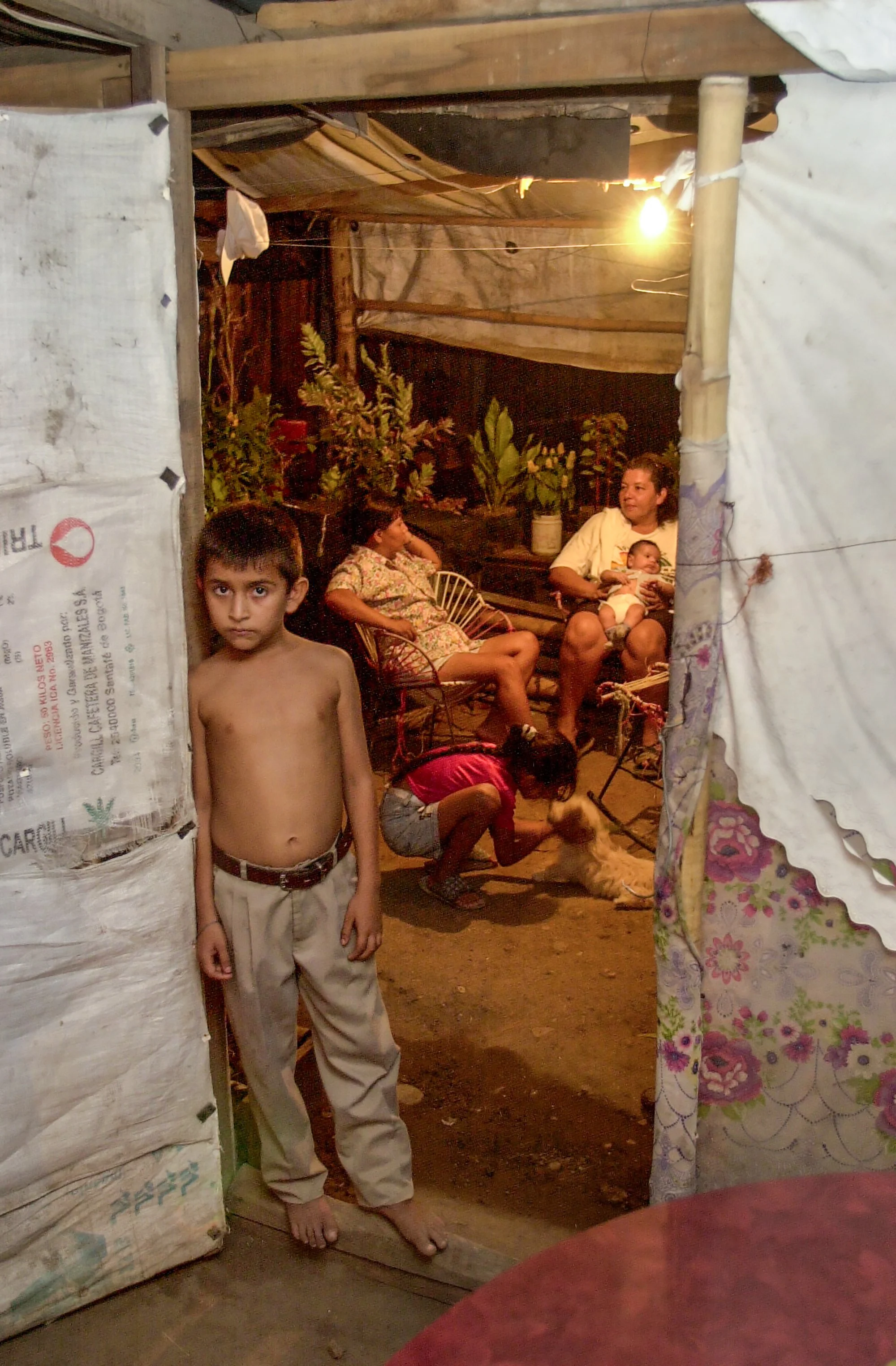
Children and neighbors mingle outside the front door of Hugo Molano's shanty home in the barrio Chicala, outside of Neiva, Colombia.
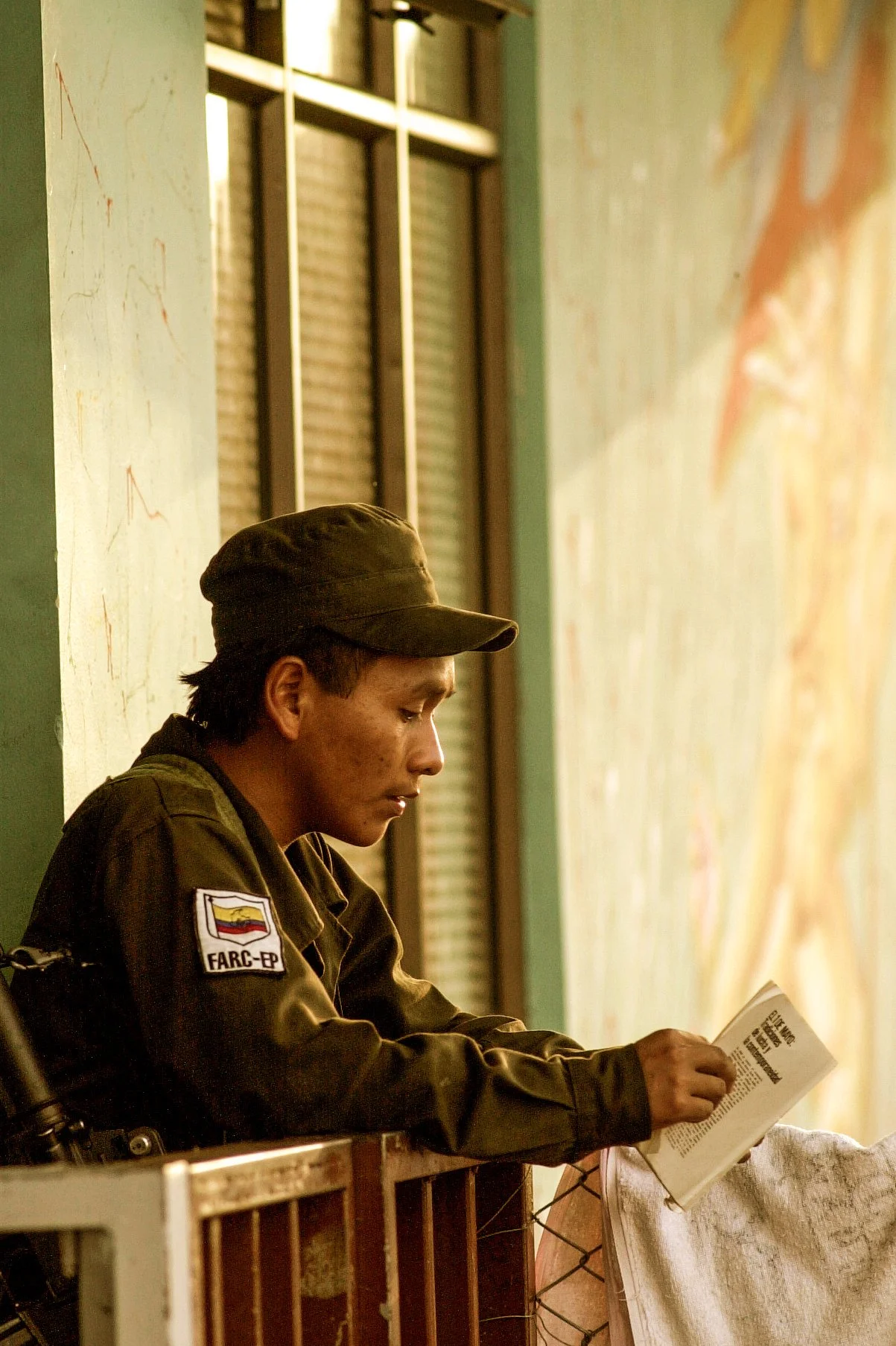
A FARC soldier reads a book about the history of communism in the Soviet Union at a FARC training camp outside of Los Pozos, Colombia.